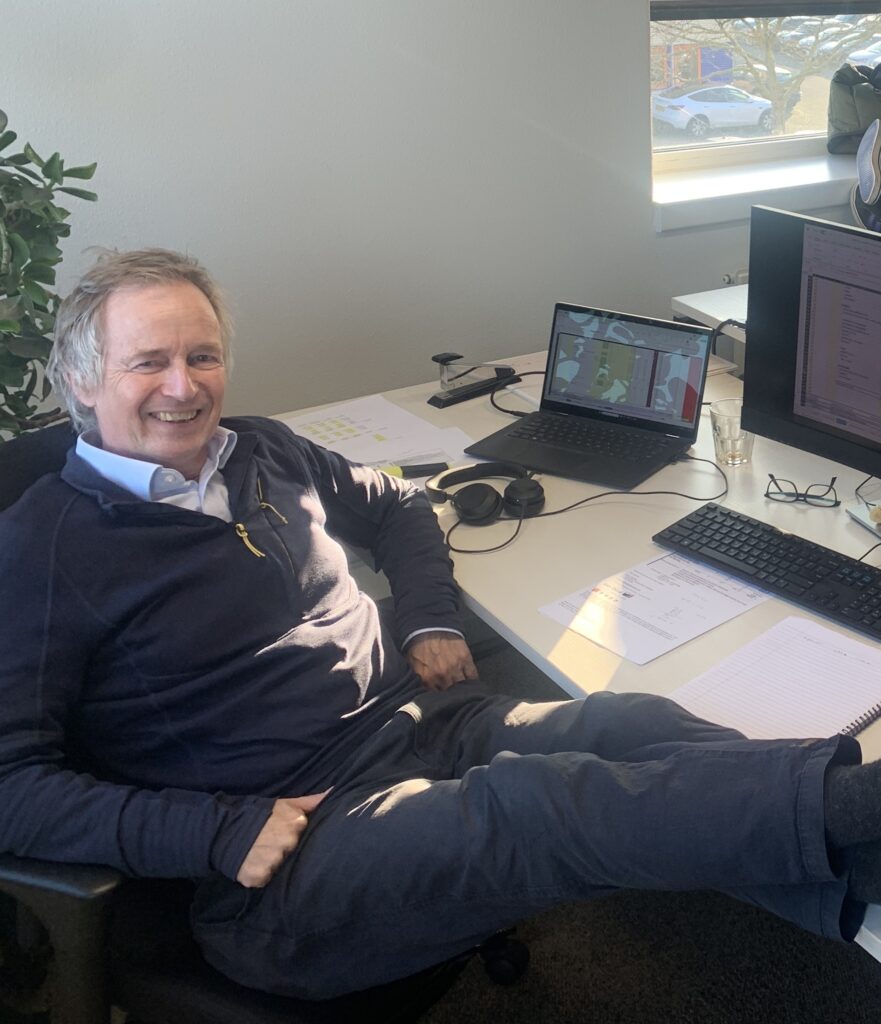
Arjen Mes

Estimating Specialist Marine Works

25+ years working experience

worked mainly for Van Oord

Why Choose Me?

I bring a (working) life full of experience in marine estimating with me, which can add tremendous value to your project. Fresh points of view from outside the own company culture can make a real difference.

I am not afraid to present views which differ from more popular views. Not afraid of confrontations, but I tend to stay friendly and don’t take things personally.

Something unusual about me is that I have been a Buddhist monk for 3 years 2017-2020. In this function your main job is to investigate the own mind. This study results in a more calm and detached way of functioning which is helpful in daily life and also when working as an estimator.

Who am I ?

A bit of history:
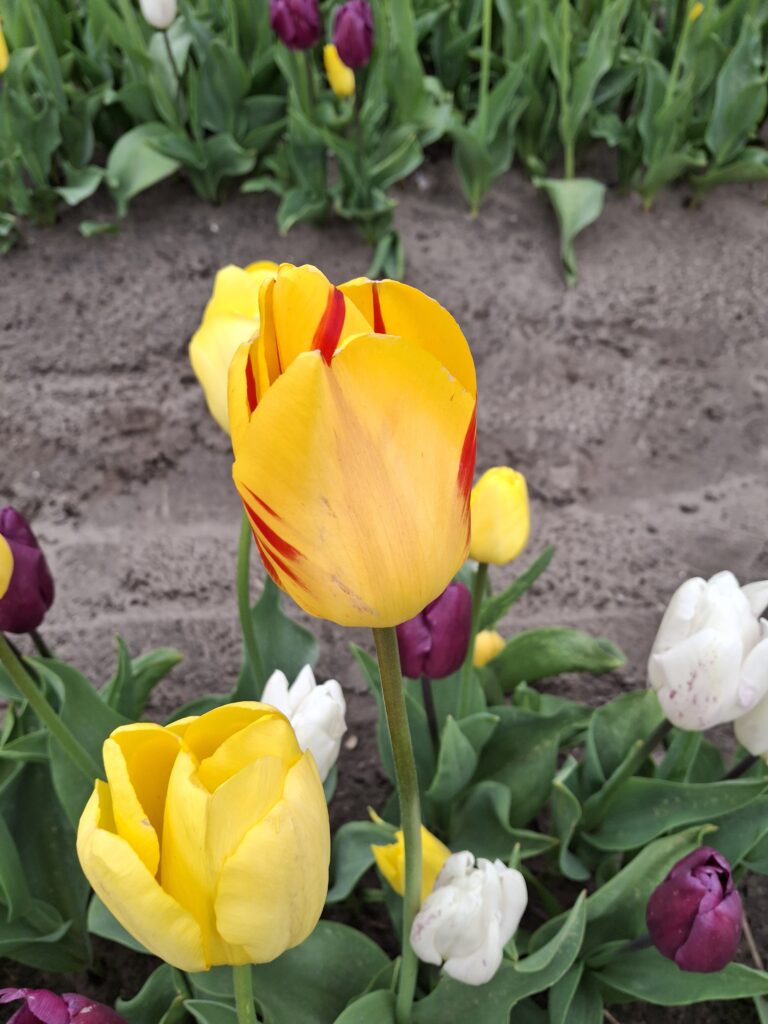
Born in the famous tulip fields of the North West of The Netherlands. Raised in a proper blue collar family: father carpenter and mother house wife with part time work in the tulip greenhouses. I think here my affinity with gardening and furniture making comes from.

I had the luck of having a nice IQ and being diligent so could enter the Technical University Delft. I had no clue what I wanted to study, choose Civil Engineering and have not regretted it. I love the combination of proper calculations, the requirement for creativity and to work in a team to get the results. This study also gave me the opportunity to see the world, which was also something I craved.

20240409 141430
1 3289129f17a3c1df77ddd705881ddcb5

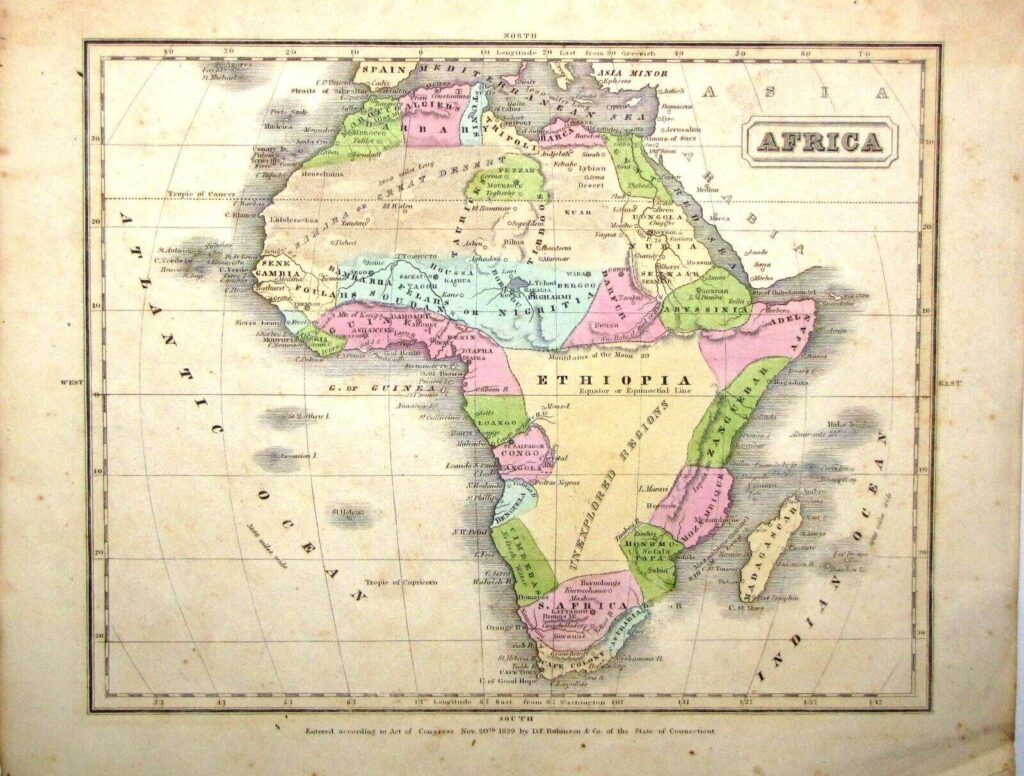
This travel bug I blame on the books I read about Livingstone and Stanley going into the blank parts of the map of Africa just for the heck of seeing what was there. Other books fed this desire to find the “blank areas on the map” as well, like books of the great Dutch sea admirals and adventures in the Levant and the Horn of Africa. Mesmerizing as a kid! 

I used to be an ardent reader, so much so that when the new library in the village I lived in opened I was invited as the person who had lent the most books of all members the last year(s)😊.

When I was ready for my own explorations, I had found out that the map was fully colored in, but the – not diminished – desire to explore brought me to interesting places nonetheless. 

In 2007 I decided to move to Thailand with my Thai wife. I made a deal with Van Oord that I would work for them in Dutch summer to take care of any shortages of estimators during the holiday season. So from 2007 till 2026 I have been working as a seasonal worker.

With the exception of 2017 to 2020, when I decided to ordain as a Buddhist monk in Thailand.
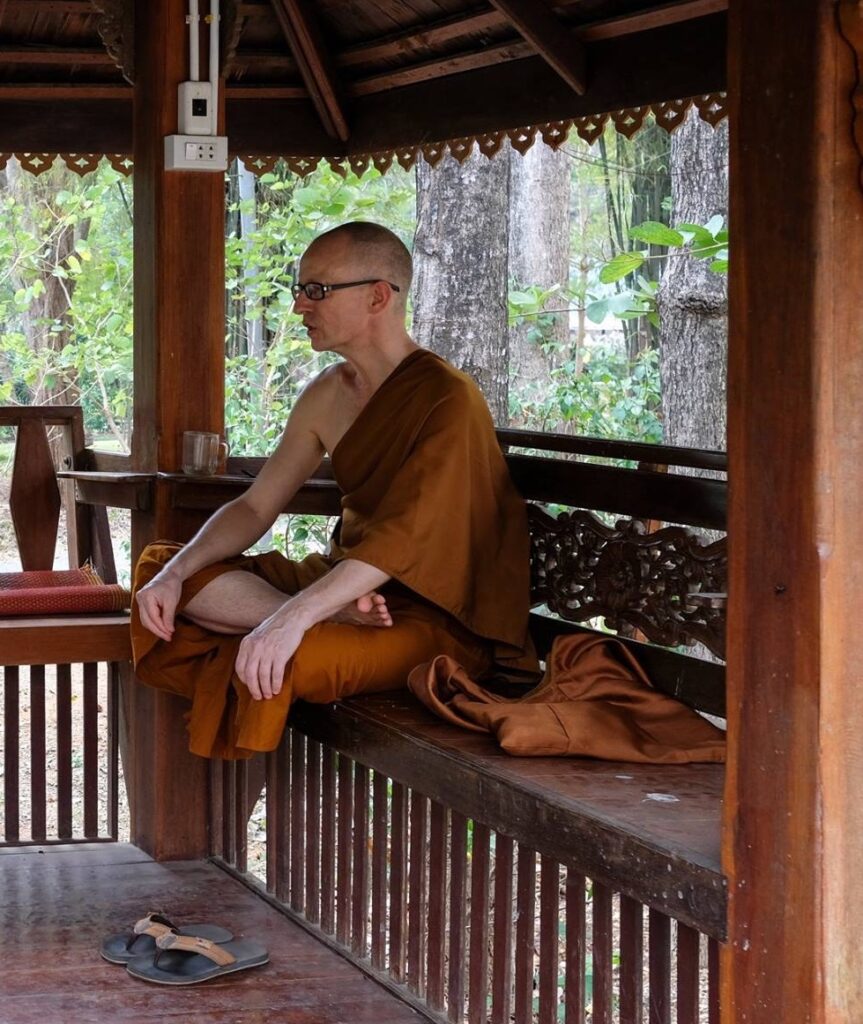
I meditated already for 20 years and squarely and solidly arrived at the flat part of the learning curve. It was clear to me that if I wanted to learn more I had to do something drastic; which I did, I became a monk for 3 years.  

The main difficulties of becoming a Buddhist monk in Thailand have to do with being fully immersed in a totally different culture, while they don’t cut you any slack! Practically it meant that I went from a culture where I was expected to speak up to anyone, including the CEO, to a culture where seniority is everything and you should respectfully listen to anyone who has more years in the robes. I found that difficult.

img 1723

Another difficulty is that there is no correlation between putting effort in meditation and making progress. For many months it can seem there is no progress at all without even an indication that progress will come in the future. That’s why an important Buddhist teaching is about the practice and perfection of the skill of patience.

However, there are also great positives. When progress comes, the quality of life improves, sometimes dramatically. When you have seen clearly enough the undesirability of certain characteristics and habits you have, you will be finally able to drop them.

I left the monastery after 3.5 years, happy with the progress and the improvement of my quality of life, but especially fed up with the hierarchic structure in the monastery where I had to respect elders who I found were unfit for my respect 😄.

Returning to lay life was not too difficult. I only gained 12 kg in the first 2 months because I finally was able to eat what I wanted and also when I wanted. From 1 meal a day in the monastery without too much choice what to eat to 3 meals a day eating whatever I wanted had its consequences.

The lessons learned as a monk I could 1 on 1 use in worldly life. Being happy with little, the ability to enjoy any moment, of course the skill of patience 😊, relaxing of opinions and desires, not taking anything personal, loving the people around me.

Since beginning of 2026 I planned to stop full time work, settle back in Thailand and do some projects remotely working from Thailand. Depending on the workload I will also have the opportunities to visit my monk friends and enjoy silent time in the forests in the North. That seems a good balance for now!

img 7323

I have attended the Technical University of Delft (The Netherlands) 1982-1988 where I studied Civil Engineering. While working for the company Van Oord I completed a specific dredging study of 2 years, numerous site specific courses and a Life Coaching Course of a year as well. 

My thesis was rather a-typical: making a model which would predict the market prices of tomatoes in The Netherlands on a day to day basis. In the same time a colleague student looked at the other side: how much it costs to grow tomatoes for the farmer and what the costs were to harvest early or delay harvesting to profit from the predicted price fluctuations.

The Life Coaching Course followed my stint in a Thai monastery as a Buddhist monk. I stayed there 3.5 years and I could classify this as study as well. The intensity of this study far surpassed anything I have done before. Except for sleeping 4.5 hours per day, the remainder of the day was for meditation, monk duties and thankfully also some time for having a coffee😊.

I am Dutch so that is my native language. I use English since 1991 when I started to work in Singapore with Rockwater, a Scottish/Dutch company. With Van Oord at least half of the day English is used. In Singapore I learned some Chinese as well, but that has been largely forgotten.

Other languages I know in a less competent manner are German, French, Spanish, Italian and Thai. They tend to get stronger in time when I have to use these languages again.

In time I was responsible for the “complex” projects. These can be projects 1) with many activities: often pipe installation projects 2) with large subcontractors 3) with difficult interfaces internally and externally 4) with a high risk profile 5) doing something Van Oord had not done before.

My resume (you can download on this page) shows for each tender I mentioned the main challenges which made that tender interesting.

In my years with Van Oord I have estimated nearly everything Van Oord is doing and has been doing. When you visit www.vanoord.com it will be also clear what I can estimate.

What I see as an “estimate” actually has a number of components. A “cost price” by itself does not say too much. 

When I make an estimate I look at the following elements:

  • build the estimate with cost elements
  • these cost elements mostly come from specialists within the company, suppliers and subcontractors. The question asked and the evaluation of the submissions are crucial, as well as close communication. I like to involve and motivate them as much as possible by making clear what the impact of their submission is
  • engineering needs to be done in close cooperation with estimator. The starting points of the engineering are the most important knobs to turn
  • a planning of the project is the first thing I like to make together with a rough price indication (first day)
  • compile questions to Client
  • compile risk register and possible mitigating actions, qualitative and quantitative
  • I love some extra attention to opportunities, also qualitative and quantitative
  • I have a strong knowledge of the technical aspects of the marine works I estimate, so I can really participate in operational discussions
  • my way of working requires all aspects of the work to be discussed with the applicable specialists
  • and lastly, I am happy to participate in commercial approaches and tendering strategies

I feel happy calculating small and large projects from say 100k Euro to 2 Billion Euro. The approach is different, but I have done the whole range.

I think it is important that an estimator is intimately familiar with the type of work he is estimating. In my case that is all marine works in “shallow waters” till say 50 meter and supporting works onshore (like bunds, cofferdams, some concrete works, pipe installation works, temporary roads, stringing yard …). The shallow water works can be anything like dredging, backfilling, beach nourishments, breakwaters, pipe pulls, pipe installation, SPM and CALM buoy installations, diving works, ROV works, surveys, cable lay, rock installation (also deep water). See also my resume.

I have regularly been involved in tender design done by 3rd parties as well. By knowing the trade intimately I often can make suggestions for significant design improvements from a cost perspective.

The last year I have been heavily involved in a number of nature enhancement tenders. The nature enhancement / compensation scopes are often part of a larger tenders. Governmental subsidies are being granted at times as well. I have looked deeply (The Van Oord PhD  specialists would think differently 😊) into coral relocation, coral nurseries, setting up a “coral factory”, installation of various structures on the seabed such as artificial reefs to improve sea life diversity, mangrove restoration.

As a personal project I made an estimation what could be done with 500 Million Euro. An interesting exercise because the large scale makes it possible that pro rata much and much more can be done than with a budget of 20 Million Euro. The design part of the project becomes relatively much smaller; it is cost effective to erect dedicated factories near the quay and ships can be modified for optimized installation.